
Not all tension within federal health facilities is audible.
Employees at the CDC campus in Atlanta continue to swipe their badges through glass doors and pass framed pictures of previous public health successes, such as the eradication of smallpox, measles, and polio. However, there has been a discernible hesitancy lately in the hallways, with conversations fading off when strangers walk by, as though everyone knows the rules have changed but nobody has noticed the memo.
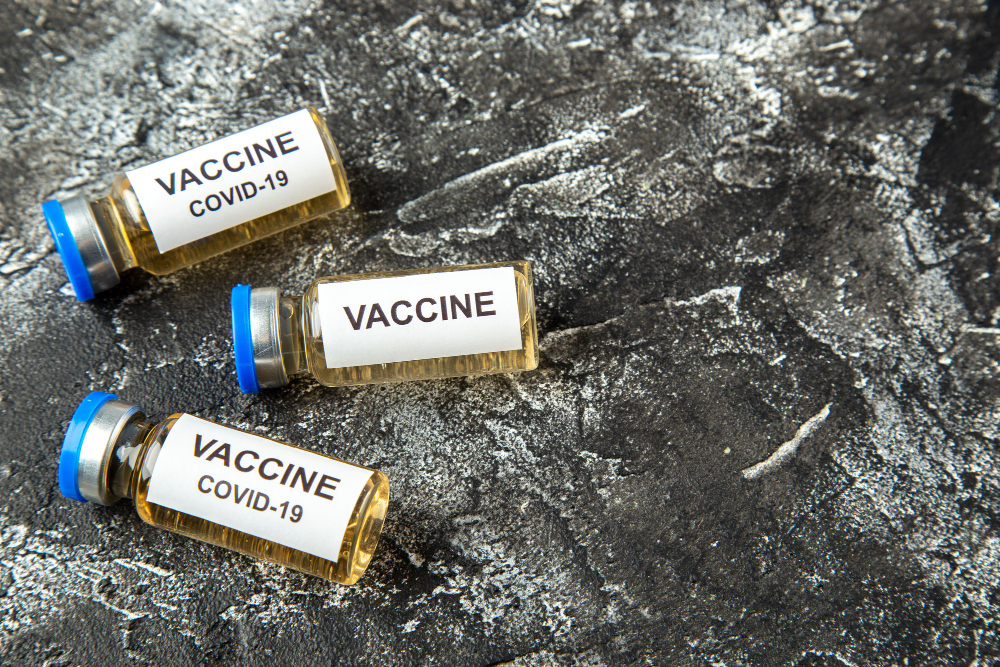
The anxiety might have started years ago, in the hectic months of 2020, when COVID-19 vaccines were vying for approval. Officials were under tremendous pressure at the time to act more quickly than the agency’s established timelines permitted. Later, some regulators spoke of feeling pressured to make decisions more quickly while striking a balance between political urgency and scientific prudence. As those events transpired, it seemed as though speed had subtly evolved into its own kind of proof.
| Category | Details |
|---|---|
| Policy Area | U.S. Vaccine Approval and Public Health Regulation |
| Key Agencies | Food and Drug Administration (FDA), Centers for Disease Control and Prevention (CDC), Department of Health and Human Services (HHS) |
| Central Issue | Allegations of political pressure affecting vaccine approvals and recommendations |
| Recent Leadership | HHS Secretary Robert F. Kennedy Jr. |
| Major Concern | Declining public trust and disruptions in vaccine research and approvals |
| Historical Context | COVID-19 Emergency Use Authorizations and Operation Warp Speed |
| Authentic Reference | https://www.cdc.gov |
The dynamic has now changed once more, albeit not necessarily in a calm direction, under the direction of Health and Human Services Secretary Robert F. Kennedy Jr. Kennedy, who has long questioned the safety of vaccines, has presided over significant changes, including the dismissal of advisory committee members, the reorientation of research priorities, and the reduction of funding for mRNA vaccine projects. Proponents refer to it as reform. It is referred to as interference by critics.
The familiar atmosphere of controlled conflict permeated the room during a Senate hearing in Washington last year. As Kennedy defended his choices, senators leaned forward, their voices rising and falling. One protester was escorted out at one point. It was a fleeting moment, but it stayed. Hearings on public health rarely felt like political theater in the past.
This change was encapsulated in the controversy surrounding Moderna’s experimental mRNA flu vaccine. The FDA abruptly changed its mind and agreed to review the vaccine after first refusing to do so, despite promising early data. The reversal sparked debate about who was influencing the process as well as the vaccine itself.
Whether that reversal was due to shifting political tides or new scientific data is still unknown.
Even in private, scientists working for federal agencies are usually cautious. Many worked for decades developing careers in mechanisms that protected research from political influence. It was assumed that scientific review functioned in a separate, secure environment. I feel less confident about that assumption now.
The repercussions are more subdued outside government buildings. Pediatric clinics report that parents are hesitant to get their children vaccinated on a regular basis and are asking new questions. According to pharmacists, patients arrive perplexed by recommendations that seemed clear at first. Although there haven’t been many significant changes to the guidelines, the messaging surrounding them has become increasingly complex.
According to polls, fewer Americans have faith in federal health agencies than in their own personal physicians. That difference is important. It implies that the institutions that regulate medicine are the problem, not medicine itself. As this develops, there is a feeling that the once-assumed credibility of public health now requires ongoing defense.
This tension has cross-administration political roots. Pressure during the pandemic took many forms, ranging from extending mandates to speeding up approvals. Every choice had repercussions. Critics were persuaded that the process had been compromised by each of them.
It appears that every administration thinks its urgency is warranted.
The underlying problem might be structural. Although federal health agencies are part of political systems, they were intended to function independently. Commissioners are chosen by leaders. Funding is under the control of Congress. Priorities are established by presidents. Total autonomy was always more of a dream than a reality.
The uncertainty has a financial impact on pharmaceutical companies. The development of vaccines takes years and billions of dollars. Businesses depend on regulated pathways that are predictable. Investment hesitates when choices seem uncertain. Some companies have already reduced their research efforts, subtly changing their expectations.
Science advances. But with caution. It’s difficult to overlook the irony. The same government that expedited the development of vaccines during the pandemic is now reevaluating the technologies it assisted in commercializing. Once heralded as a breakthrough, mRNA has since become controversial in politics. It has taken time for the science to change. Politics has.
Everything is shaped by that distinction. The topics of discussion at a recent CDC advisory meeting, which took place in a conference room with a view of a parking lot full of government sedans and pickup trucks, sounded technical: trial data, risk ratios, and dosage intervals. But there was more to it than the technical jargon. consciousness. cautious wording. An awareness that the audience now spanned the entire room.
Suddenly, there were people watching science. It’s difficult to overlook how public health has evolved into a battlefield for larger cultural disputes. Once commonplace, vaccines now have symbolic significance. Endorsing them is a sign of institutional trust. It shows skepticism to question them. Both sides have become inflexible.
Political certainty has emerged. The long-term effects are still unknown. Research on vaccines will go on. Data will still be reviewed by regulatory bodies. However, the atmosphere surrounding those choices seems different—less protected, more contentious.
It seems like something fundamental has changed as we watch this play out—not in the science per se, but in the way it is viewed, questioned, and trusted. Furthermore, trust rarely becomes simple again after becoming complicated.